
This post may contain affiliate links. As an Amazon Associate, I earn from qualifying purchases.
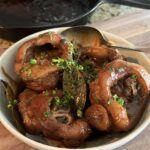
This is truly an underrated Filipino dish. My mom’s pata tim recipe braises pork hocks in a sauce made with tangy pineapple juice, soy sauce, and brown sugar. It becomes a rich, glossy glaze that coats the tender chunks of pork and is perfect for spooning over rice!

MY DEBUT COOKBOOK:
FILIPINO STYLE
80 comforting recipes for home-cooked eats.
Ingredients and Substitutions
*The Recipe Card below includes all the full measurements for these ingredients!
Pork hocks: Also known as pata in Tagalog, this is the main protein in this recipe, which requires a good amount of simmering time to ensure its meat and outside fat become fork-tender! You can typically find these in most groceries or Asian markets. If they come as a whole hock, you can ask the butcher to cross-cut them for you if available.
Onion, garlic, black pepper, bay leaf: The standard aromatics and spices used in many Filipino dishes. You may also add other spices, such as star anise, cinnamon, or Chinese cassia for more flavor.
Soy sauce, pineapple juice, oyster sauce, brown sugar: These will make up the glossy, sweet, and savory sauce. Pineapple juice can be replaced with Sprite or 7-Up (very popular in other recipes), just be sure to adjust the sugar accordingly to avoid the sauce being too sweet. Brown sugar can also be substituted with white sugar.
Instructions
*The Recipe Card below includes all the full detailed instructions!
Sear the pork hocks until browned, set aside.

Saute the onions and garlic. Pour in the pineapple juice, soy sauce, brown sugar, oyster sauce, and spices. Return the pork hocks to the pan, pour in enough water to cover, and let simmer until fork tender.

Increase the heat to high to begin reducing the sauce until thick and glossy, basting the hocks regularly.

Serve immediately. Enjoy!

Cooking Tips
Choose the right pork hocks: Use bone-in hocks with the skin intact! The skin is what becomes gelatinous during the braising, giving pata tim its signature texture.
Gently simmer the pork: Try to avoid too vigorous of a boil with this dish, as it can cause the meat and skin to break apart.
Add water as needed: Check the pot occasionally during braising. If the liquid reduces too quickly, add water a little at a time to prevent the sauce from drying out or burning.
FAQs (Frequently Asked Questions)
What is pata tim?
Pata tim is a Chinese-influenced Filipino dish using braised pork hocks. There are many different variations of this dish using anything from pineapples, sprite, ketchup, and other aromatics. This is my mom’s version which she keeps fairly simple, but it tastes incredible!
How long does it take to tenderize pork hocks?
Hocks generally need about 2 hours of gentle simmering for their meat and skin to become fully tender, depending on their size. My general rule is to check on the pork at around the 2 hour mark, and the skin should be soft and gelatinous rather than chewy.
Can I make this ahead of time?
Yes, and it will taste even better the next day! Transfer the cooled pata tim into an airtight container and reheat gently on the stove top when ready to eat. Add a splash of water as needed if the sauce has thickened too much during refrigeration.

Pata Tim (Braised Pork Hock Stew)
2
servings10
minutes2
hours30
minutes2
hours40
minutesThis is truly an underrated Filipino dish. My mom’s pata tim recipe braises pork hocks in a sauce made with tangy pineapple juice, soy sauce, and brown sugar. It becomes a rich, glossy glaze that coats the tender chunks of pork and is perfect for spooning over rice!
Keep the screen of your device on
Ingredients
1 to 1.5 kg pork hocks, cross-cut
1 tablespoon neutral oil
1 small onion, chopped
5 garlic cloves, minced
1/2 cup pineapple juice
1/4 cup soy sauce
1/4 cup packed dark brown sugar
1 tablespoon oyster sauce
1 teaspoon whole black peppercorns
3 bay leaves
Water, enough to cover the pork hocks
Directions
- In a large iron skillet or dutch oven, heat the oil over medium-high heat. Once hot, add the pork hocks and sear for 2 to 3 minutes on each side until browned. Set aside.
- In the same pan, sauté the onion until softened, about 2 minutes (add more oil if needed). Add in the garlic, and sauté for 1 to 2 more minutes until golden and fragrant.
- Pour in the pineapple juice, soy sauce, brown sugar, oyster sauce, black pepper corns, and bay leaves. Mix well.
- Return the seared pork hocks to the pan and pour in just enough water to cover the hocks. Increase the heat to high and bring to a boil. Using a spoon, skim off any scum that float to the surface. Cover, and lower the heat to medium-low to simmer for about 2 hours, or until the meat is fork-tender and the fat is no longer chewy.
- Remove the hocks and transfer to a separate plate. Increase the heat to high, and begin reducing the sauce until lightly thickened, about 5 to 7 minutes.
- Return the hocks to the pan, and continue reducing the sauce for another 5 to 7 minutes, basting the hocks continuously. The sauce should be glossy, not overly sticky, and can coat the back of a spoon.
- Serve immediately with warm rice and green vegetables, if desired.
*Note: You may also garnish the tops with chopped green onions. In my version, I made a Filipino-inspired gremolata, consisting of equal ratios of finely chopped green onions and Italian parsley, along with the zest of two calamansi, and a grated garlic clove!
This post may contain affiliate links. As an Amazon Associate, I earn from qualifying purchases.





)