This post may contain affiliate links. As an Amazon Associate, I earn from qualifying purchases.
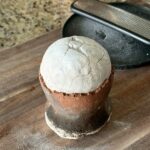
As a souvenir from the Philippines, I knew I had to come home with Asin Tibuok, sometimes nicknamed the “dinosaur egg” for its round shape, and is a rare traditional sea salt from Bohol.
I’ve spent the past couple years cooking with it and wanted to understand not only how it was made, but what you’re actually supposed to do with it once you have one in your kitchen.
Quick Overview
- Asin Tibuok translates to “whole” or “unbroken salt”, involving a physically demanding process of burning coconut husks, filtering seawater through them, and boiling the concentrated brine in clay pots.
- It has an earthy, smoky taste, with some mentioning having hints of sweetness and fruity notes.
- For use in home kitchens, you can break, scrape, or grate the Asin Tibuok directly over finished dishes as a finishing salt.
How it Tastes
Asin Tibuok has a sharp, earthy, somewhat smoky taste. It’s important to note that the ‘smoky’ flavor comes from their production process (more on that below) rather than simply smoking the finished salt, so don’t expect this to taste like an aggressive campfire-smoked salt!
The taste also depends on how you prep it, too. Grate it to produce a fine powder, and the taste is mellow and rounded, and much less salty-tasting compared to standard table salt. Use a knife to instead break off tiny chunks, and its saltiness and mineral-notes become much more pronounced.


The difference mostly comes down to salt distribution: finely grated coats food more evenly, while larger pieces give more concentrated bursts of saltiness. Either way is up to preference depending on how much you want the salt itself to stand out.
How it’s Used
Traditionally, the salt is used to flavor rice porridges and to cure meats and fish.
And no, you do not have to somehow dismantle the entire thing into a container of loose salt. Simply scrape or grate the surface as you need it and use the resulting salt to season food. Another method is to use a knife to chip off tiny chunks, which would be more fitting for soups and stews where they’d naturally dissolve into the dish.
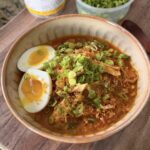
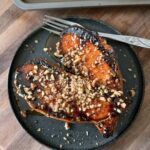
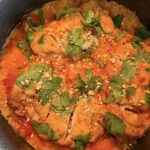
I personally love using it as a finishing salt, grating it directly over food after cooking. It’s especially useful on simpler foods where the salt has room to stand out, think grilled meats and roasted veggies. On something heavily seasoned, say, a soy-braised chicken stew, a lot of its subtler characteristics can easily get lost, so I’d just go for everyday kosher salt in those cases.

I also wouldn’t automatically substitute it one-for-one by volume when a recipe calls for table or kosher salt. How finely you grate or break the Asin Tibuok changes how densely it packs into a spoon, so for precise recipes, it’s better to season to taste or measure by weight.
At the end of the day, it’s still salt. You can use it practically anywhere, on steak, seasoning vegetables, grating over baked goods, or anything else where you’d normally want a final hit of salt.
How it’s Made
It’s a gruelling process that spans over months, and UNESCO has a great video on their page that shows just how demanding and particular the making of Asin Tibuok is.
- It starts with mature coconut husks, which are soaked in seawater for at least three months to absorb salt and minerals. After soaking, they’re chopped in smaller pieces, dried under the sun, and burned to produce a hardened ash-salt material called gasang.
- The gasang is then placed inside a funnel-shaped filter called a sagsag made from buri leaves, where seawater is poured through it to produce a concentrated brine known as tasik.
- The resulting tasik is finally poured into handmade clay pots and heated over fire, evaporating the water and leaving behind a solid mass of salt, which is how we end up with this beauty:

Sources
If you want to dive deeper, here are a couple sources I’ve found fascinating relevant to my research:
- https://ich.unesco.org/en/USL/the-practice-of-making-asin-tibuok-the-artisanal-sea-salt-of-the-boholano-of-bohol-island-philippines-02316
- https://tribune.net.ph/2025/12/10/more-than-preserving-flavor-bohols-asin-tibuok-making-inscribed-in-unescos-urgent-safeguarding-list
This post may contain affiliate links. As an Amazon Associate, I earn from qualifying purchases.